
Fuel Trailers 101: Applications, Sizing & Buying Guide
Choosing the right fuel trailer involves more than selecting a tank capacity. Equipment fuel consumption, operating schedules, towing capabilities, fuel delivery requirements, and dispensing needs all play a role. This guide explains the key considerations to help businesses determine the appropriate fuel trailer configuration for their operation.
Applications
Fuel trailers are used by a wide range of businesses, from small landscaping companies to large construction crews. The right size depends on how many machines you're fueling, how much fuel they consume, and how often you want to refill the trailer.
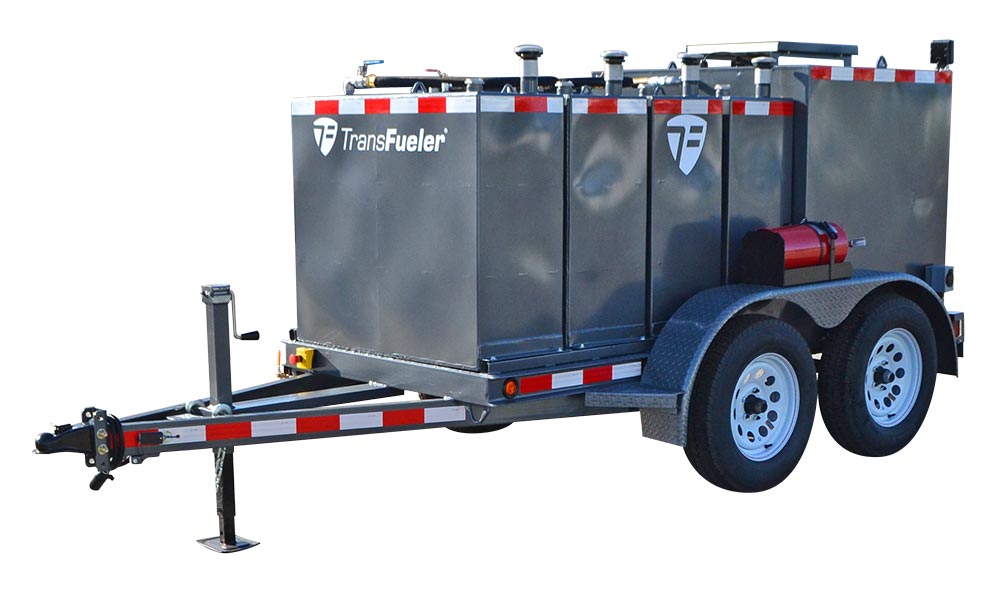
Common Fuel Trailer Capacities
| Capacity | Potential Applications |
|---|---|
| 250–500 gallons | Smaller businesses fueling a limited number of machines, such as landscaping companies, golf course maintenance crews, small farms, and independent contractors. |
| 750–1,000 gallons | Medium-sized operations fueling multiple machines or crews, such as equipment rental companies, larger farms, public works departments, and construction contractors. |
| 2,000–2,500 gallons | Larger operations with several pieces of heavy equipment running daily, such as road construction companies, excavation contractors, large agricultural operations, and equipment rental companies. |
| 3,000–4,000 gallons | High-volume operations fueling large equipment fleets or working several days between refills, such as major construction projects, mining operations, and large industrial sites. |
These are general examples, not fixed recommendations. A small business that can't refill its trailer frequently may need more capacity than a larger operation that refills daily.
Sizing a Fuel Trailer
Choosing the right fuel trailer starts with understanding how much fuel your operation uses and how long you need that fuel to last.
Step 1: Estimate Equipment Fuel Consumption
Start by listing the equipment you'll be fueling, how many machines you have, and how much fuel they typically use.
For example, consider a construction crew operating:
| Equipment | Quantity | Fuel Use per Unit | Hours/Day | Daily Total |
|---|---|---|---|---|
| Excavators | 3 | 3 GPH | 8 | 72 gal. |
| Wheel loaders | 2 | 3 GPH | 8 | 48 gal. |
| Compact equipment | 2 | 1.5 GPH | 6 | 18 gal. |
| Total | 138 gal. |
Step 2: Determine Your Refill Schedule
Once you know your daily fuel consumption, decide how many days the trailer needs to last between refills.
Daily Fuel Consumption × Days Between Refills = Required Fuel
For a crew using 138 gallons per day over five days:
138 gallons × 5 days = 690 gallons
A 750-gallon trailer could be a good option, provided its usable capacity meets that requirement.
If fuel demand changes throughout the week or refilling is difficult, additional capacity may be beneficial.
Step 3: Account for Usable Fuel Capacity
A trailer's advertised capacity isn't always the amount of fuel available for dispensing.
Fuel tanks need room for expansion, and some fuel may remain in the tank because of its design and pickup location.
Always check the manufacturer's specified usable capacity when calculating how long your fuel will last. Don't assume the full advertised tank capacity is available for dispensing.
Step 4: Consider Your Towing Vehicle
Fuel is heavy. Diesel weighs approximately 7 pounds per gallon, while gasoline typically weighs around 6 pounds per gallon.
The following table shows approximate fuel-only weights at different capacities:
| Fuel Capacity | Diesel Weight | Gasoline Weight |
|---|---|---|
| 250 gallons | 1,750 lbs. | 1,500 lbs. |
| 500 gallons | 3,500 lbs. | 3,000 lbs. |
| 750 gallons | 5,250 lbs. | 4,500 lbs. |
| 1,000 gallons | 7,000 lbs. | 6,000 lbs. |
| 2,000 gallons | 14,000 lbs. | 12,000 lbs. |
| 2,500 gallons | 17,500 lbs. | 15,000 lbs. |
| 3,000 gallons | 21,000 lbs. | 18,000 lbs. |
| 4,000 gallons | 28,000 lbs. | 24,000 lbs. |
These weights represent fuel only. The trailer, tank, pumps, hoses, and other equipment add additional weight.
Before choosing a trailer, confirm that your towing vehicle and trailer are rated for the fully loaded weight. Check towing capacity, trailer gross vehicle weight rating (GVWR), gross combined weight rating (GCWR), payload limits, hitch requirements, and braking requirements.
Larger trailers may require heavy-duty commercial trucks or specialized towing arrangements.
What You Need to Know Before Buying
Fuel Suppliers, Bulk Pricing, and Delivery Requirements
Fuel suppliers may offer volume discounts or lower delivery fees for larger fuel orders. For example, a supplier might offer better pricing on deliveries of 1,000 gallons or more. Purchasing a 750-gallon trailer could mean missing those savings, even if its capacity meets your daily fueling requirements.
Suppliers may also have specific filling requirements, including preferred connections, delivery rates, or submerged-fill arrangements. Confirming delivery minimums, pricing thresholds, and filling requirements before purchasing can help prevent unexpected costs or equipment modifications.
Transportation and Dispensing Requirements
Fuel type, tank configuration, capacity, and vehicle weight ratings can affect DOT compliance, CDL requirements, and Hazmat endorsement requirements. These requirements vary depending on the specific trailer configuration, fuel being transported, vehicle combination, and applicable federal and state regulations.
Certain smaller or modular tank systems may qualify for specific transportation exceptions, but exemptions should never be assumed based on tank size alone. Verify applicable requirements before purchasing or transporting fuel.
Dispensing performance is another consideration. A pump rated for 50 GPM may deliver less through the complete system because of hose length, filters, fittings, and pressure losses.
The amount of fuel being dispensed and how quickly equipment needs to be refueled can help determine the appropriate pump and hose configuration.
Commercial Fuel Sales and Storage Considerations
Businesses planning to resell fuel may need commercial metering equipment rather than a standard meter intended for internal fuel tracking. Selling fuel by the gallon can involve approved and calibrated meters, inspections, and other applicable requirements, depending on the jurisdiction and application.
TCS (Total Control Systems) metering options are available for appropriate commercial fueling applications.
Fuel turnover also matters. Larger trailers can reduce refill frequency and improve bulk purchasing opportunities, but storing more fuel than the operation regularly uses can increase storage time and fuel maintenance needs.
Frequently Asked Questions About Fuel Trailers
How do I determine what size fuel trailer I need?
Start by calculating the daily fuel consumption of the equipment you'll be fueling. Multiply that amount by the number of days you want to operate between refills. Then account for usable fuel capacity, fuel delivery requirements, and towing limitations.
How much does a fully loaded fuel trailer weigh?
The total weight includes the fuel, trailer, tank, pumps, hoses, and accessories. Diesel weighs approximately 7 pounds per gallon, while gasoline weighs approximately 6 pounds per gallon. Check the manufacturer's specifications for the trailer's empty weight and GVWR to determine its allowable loaded weight.
What size fuel trailer can I tow without a CDL?
There isn't a single gallon-capacity limit that determines whether a CDL is required. Requirements depend on factors such as the towing vehicle, trailer GVWR, combined weight ratings, fuel classification, and applicable hazardous materials regulations. Check current FMCSA and DOT requirements for your specific towing combination and application before purchasing.
What is the difference between advertised capacity and usable fuel capacity?
Advertised capacity refers to the tank's stated volume. Usable capacity is the amount of fuel that can actually be dispensed. Tank design, expansion space, and pickup location can affect how much fuel is available for use. Always confirm usable capacity with the manufacturer.
Key Takeaways
Choosing the right fuel trailer capacity starts with understanding your equipment's fuel consumption and how frequently the trailer will be refilled.
Fuel supplier requirements, bulk pricing, towing capabilities, dispensing performance, and transportation regulations can also influence the best configuration.
The right trailer provides enough fuel to support your operation without adding unnecessary weight, cost, or complexity.
Need Help Selecting the Right Fuel Trailer?
TransFueler can help you determine the right tank capacity and configuration for your application, whether you're fueling construction equipment, commercial fleets, generators, or aviation operations.